Port of Newcastle has formalised its position as the primary logistics gateway for the state’s renewable energy transition after becoming the first maritime facility in New South Wales approved to store grid-scale lithium-ion batteries. Granted for its Mayfield Multipurpose Terminal following collaboration with the Department of Planning, Housing and Infrastructure, the regulatory mechanism allows project developers to manage complex supply chain timelines for major battery energy storage systems (BESS).
The industrial staging capability underpins a combined 1.7 gigawatts of dispatchable capacity and 6.8 gigawatt-hours of energy storage across three major state operations: AGL’s Tomago Battery, Origin Energy’s Eraring Battery, and the Bellambi Heights Battery Energy Storage System. Collectively, these assets hold the capacity to power over one million households during peak demand cycles.
The validation of PON’s dangerous goods handling and technical storage compliance coincides with the state government’s approval of the Stratford Pumped Hydro and Solar Project under the NSW Electricity Infrastructure Roadmap. To absorb the accelerating volume of specialised, high-consequence energy cargo, PON is executing a $36 million berth extension project at its Multipurpose Terminal to accommodate larger heavy-lift vessels and scale containerised cargo pads.
Chief Executive Officer of the Port of Newcastle, Craig Carmody noted that embedding specialised chemical and structural handling capabilities forms the core of the port’s long-term asset diversification roadmap.
“This isn’t just a milestone for Port of Newcastle – it’s yet another way we’re helping customers deliver the infrastructure NSW needs to support a more diverse energy mix,” Craig said.
“These are complex cargoes that require specialist handling, purpose-built infrastructure and the right safety systems. We’ve invested in that capability because we see where the market is heading and what our customers will need. Whether it’s wind turbine components, grid-scale batteries or other major project cargo, PON has built a reputation for handling complex logistics safely, efficiently and reliably.”
Craig added that establishing the regulatory framework required close alignment with Minister for Planning and Public Spaces Paul Scully, alongside state development agencies, to de-risk private equity deployments in regional energy infrastructure.
“Projects like these only happen when industry and government work together,” Craig said.
“We’re proud to support companies like AGL and other project owners delivering critical energy infrastructure across NSW, and we appreciate the collaborative approach taken by Minister Paul Scully, the Minns Labor Government and NSW Government agencies. Their support has helped create the right conditions for PON to invest in new capability and continue building the infrastructure that supports the State’s energy future.”
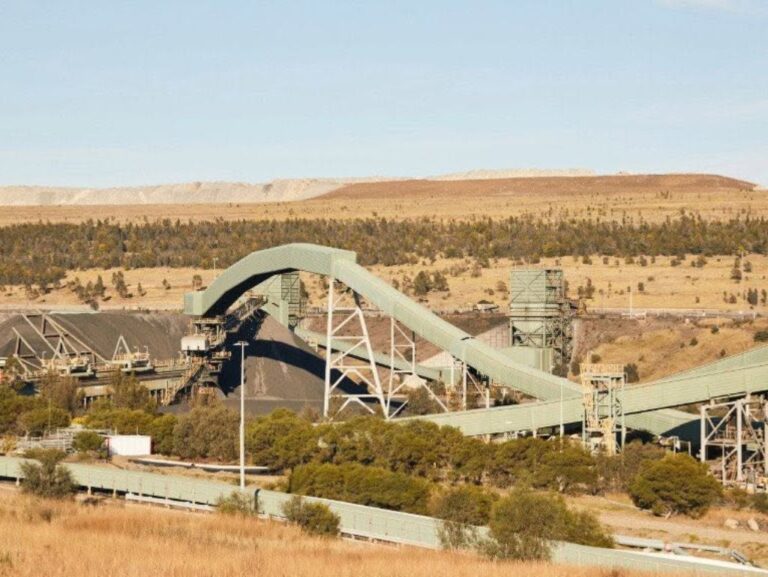
The strategic pivot to specialised green infrastructure cargo runs parallel to PON’s traditional bulk commodity portfolios. The port continues to operate as the largest coal export gateway globally, maintaining consistent high-volume throughput across its traditional coal and grain handling terminals.
Chief Operations and Construction Officer at AGL, Matthew Currie stated that local maritime staging areas remove critical logistical friction points from large-scale construction schedules.
“Our grid-scale battery fleet is growing, with construction underway on AGL’s 500 MW/ 2000 MWh Tomago Battery, which is expected to be operational in the second half of 2027,” Matthew said.
“Grid-scale batteries are critical to Australia’s energy transition, supporting reliability and stability by dispatching energy when customers and the grid need it. As we prepare for the installation of more than 400 lithium-ion battery units to form the Tomago Battery, the ability to safely receive and temporarily store battery units and other components at the Port of Newcastle is providing important flexibility for our project team.”
IMAGE | Port of Newcastle secures first NSW maritime approval for grid-scale battery logistics hub