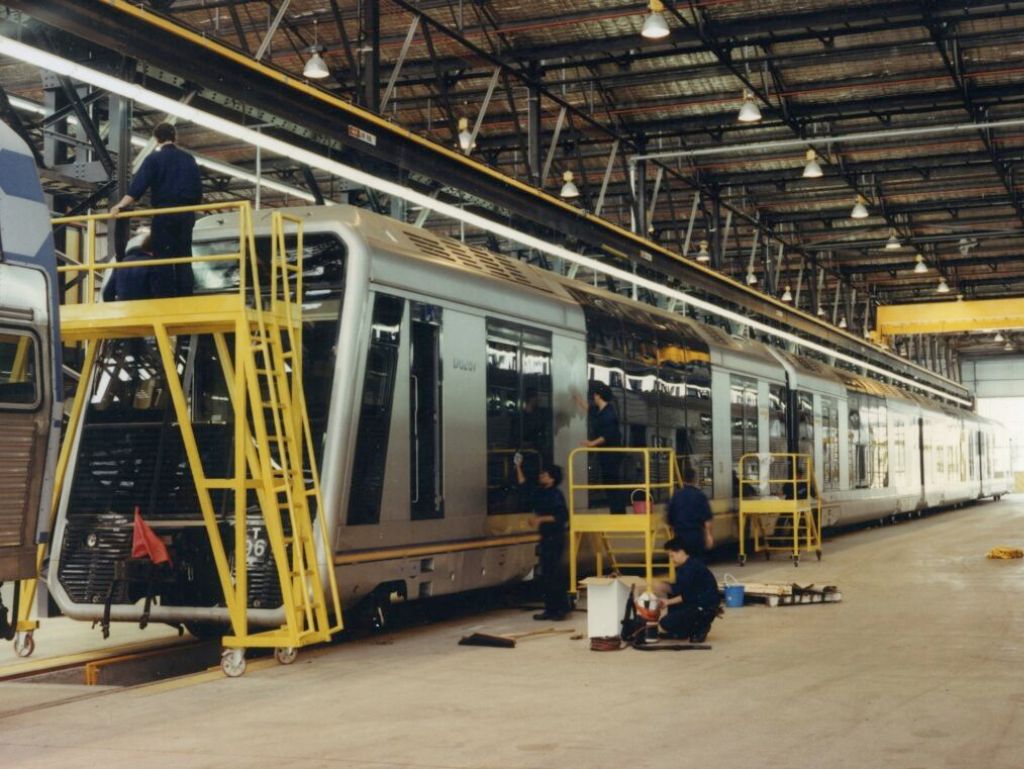
Business Hunter has applauded a strategic procurement pledge by New South Wales Premier, Chris Minns to re-establish the Hunter region as the state’s primary hub for heavy passenger rail manufacturing. Announced at the NSW Labor Conference, the state government intends to direct $12 billion into domestic train manufacturing capital works, identifying industrial parcels in Teralba and Broadmeadow as the primary candidate sites for a specialised rail assembly facility.
The proposed infrastructure asset will be constructed via a public-private partnership framework and operated by a private sector manufacturer. This policy shifts the state’s rolling stock procurement strategy back to localised industrial corridors after more than a decade of offshore manufacturing allocations.
Chief Executive Officer of Business Hunter, Bob Hawes noted that the multi-billion-dollar sovereign capability investment validates the region’s dense heavy-engineering capacity.
“This is a huge vote of confidence from the NSW Government in the Hunter’s industrial capability and their desire to see that strength upheld,” Bob said.
“We are really pleased to see the Government adopting a ‘build them here’ approach and recognising that governments have an ability and responsibility to support jobs, skills development and local businesses through the supply chain by manufacturing trains right here in our state’s industrial heartland.
“The long-chain economic impacts of backing facilities like this are significant. There is a real and demonstrable benefit to not only this industry but many different sectors that will feed into it.”
The centralised assembly strategy is designed to stimulate deep secondary supply networks across the Hunter, activating local engineering firms, component manufacturers, and digital systems developers. Bob stated that positioning the facility within the Newcastle and Lake Macquarie industrial perimeters leverages historical regional assets while anchoring modern commercial workflows.
“The proposal keys into the region’s DNA when it comes to manufacturing, building and making things, especially train building,” Bob said.
“Our future economy will be based on a mixture of existing and emerging industries and it’s difficult to think of an industry better-placed than train building on which to build on that traditional strength.
“There will be enormous ongoing opportunity to supply government trains, and potentially High Speed Rail, and our region has the skills, technology and innovative approach to build them now and into the future.”
The commercial operational model structures the state government as the primary anchor customer and capital investor rather than the day-to-day industrial operator. This commercial separation allows the private operator to scale production capacity flexibly, position the facility to pitch for interstate rolling stock contracts, and integrate future federal infrastructure projects such as the High Speed Rail network.
“It makes sense that the state government is a major investor and customer, rather than the operator, so there is flexibility in the operating model,” Bob said.
IMAGE | Train-building pledge a boom for Hunter’s manufacturing future