Newcastle Art Gallery has commissioned two permanent projects designed to improve accessibility and inclusion following its recent facility expansion. The initiatives include a sculptural intervention to the gallery’s original 1977 floating staircases and the launch of Nancy, the organisation’s first digital access guide.
The new digital guide provides a 24-stop tour of the ground floor collection via audio, written descriptions and Auslan-interpreted video. Developed using a ‘by community, for community’ model, the platform has been accessed by more than 8,000 visitors since its soft launch. It is named in honour of Nancy Tapp, a volunteer who served the gallery for 36 years.
Director of Newcastle Art Gallery, Lauretta Morton said the expansion provided an opportunity to embed inclusive design into the building’s infrastructure.
“The expansion of the Newcastle Art Gallery provided the ideal opportunity to ensure access and inclusion were at the heart of how our community can experience our reimagined facility,” Lauretta said.
“From using an artistic and access-led solution to the physical challenge created by the space under the staircases for visitors who are blind or have low vision, to developing our first digital guide, which has already been accessed by more than 8,000 visitors, we are committed to collaborating with community members with lived experience to deliver better outcomes for everybody.”
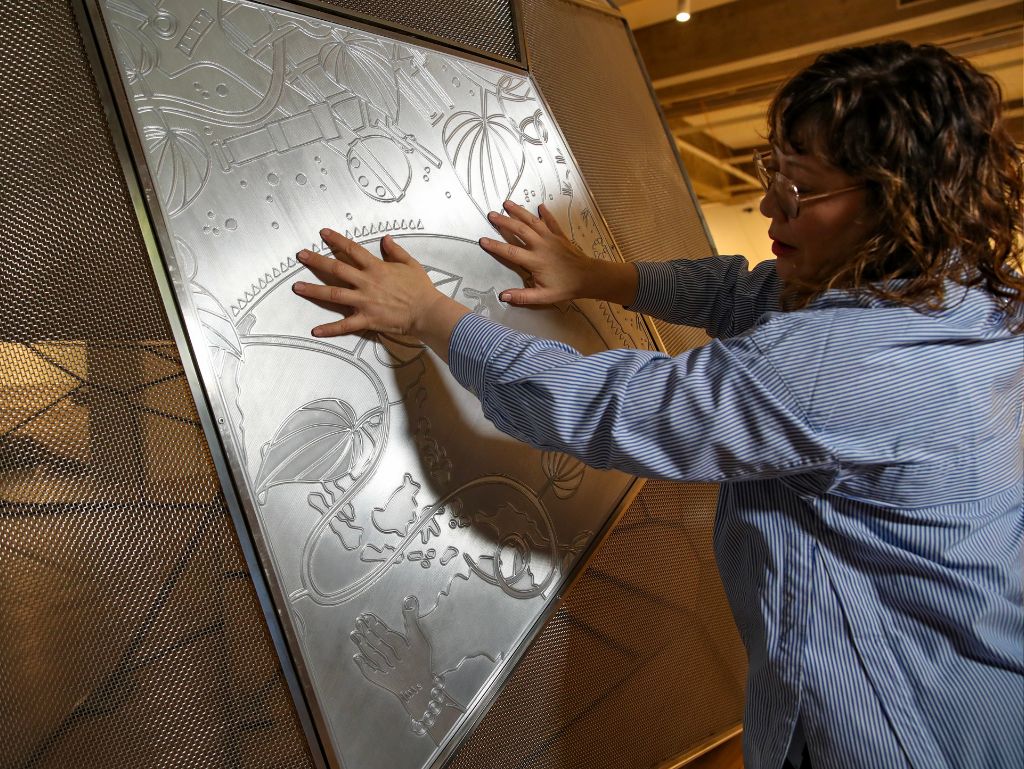
Internationally recognised artist Fayen d’Evie was commissioned to create architectural-scale sculptures to address modern building code requirements for the gallery’s floating staircases. The sculptures function as tactile barriers for visitors with vision impairment while incorporating braille and touch-based versions of key artworks.
Fayen said the works were designed to facilitate conversation while honouring the original 1970s architecture.
“I wanted these sculptures to be invitations not barriers, and architectural prompts for conversation between visitors, sighted and blind alike,” Fayen said.
“They honour the original staircase structure, while creating a tactile veil around it.”
Auslan trainer and interpreter, Thomas Doe, who assisted in the development of the digital guide, said the inclusion of Auslan video allows the d/Deaf and hard of hearing community to engage more deeply with the exhibition narratives.
“The Art Gallery team approach the project with open minds and a genuine commitment to inclusion,” Thomas said.
“Providing Auslan access means d/Deaf and hard of hearing people can do more than just view the artwork – they can connect with the stories, understand the artist’s intention, and fully experience the exhibition.”
The projects were funded through a combination of City of Newcastle investment and state grants, including $100,000 from Creative Australia and the NSW Government for the sculptural commissions.
Co-chair of the Access Inclusion Standing Committee, Elizabeth Adamczyk said the improvements align with the city’s Disability Inclusion Action Plan (DIAP), which is currently undergoing community consultation for the 2027 renewal.
“Art should always be for everyone, and the Newcastle Art Gallery team should be commended for their work to ensure one of our city’s key cultural landmarks can be better enjoyed by all,” Elizabeth said.
IMAGE | Newcastle Art Gallery integrates art-led accessibility in facility expansion