A new centralised health infrastructure partnership will expand regional access to medical research pipelines and experimental therapies across the Hunter New England region. Trading as Hunter New England Clinical Trials, the initiative integrates the operational resources of the Hunter Medical Research Institute (HMRI), the Hunter New England Local Health District (HNELHD), and the University of Newcastle into a single coordinated framework designed to scale local trial execution.
The combined delivery model aims to reduce geographical access barriers for regional patient cohorts, establishing a single point of entry for multi-phase corporate and investigator-led clinical programs. The operations are underpinned by a purpose-built Clinical Trials Facility co-located within the John Hunter Health and Innovation Precinct to embed trial participation directly into routine public healthcare delivery.
Institute Director and Chief Executive Officer of HMRI, Professor Frances Kay said the program establishes equity of clinical access between metropolitan centers and regional communities.
“Hunter New England Clinical Trials will make sure people in our region have the same access to new treatments as those in major cities, without having to travel too far from home,” Frances said.
“For many people, taking part in a clinical trial hasn’t been straightforward. It can mean travelling, navigating complex processes, or simply not knowing what’s available.
“By bringing our hospitals, clinicians and researchers together, we’re making it easier to deliver trials locally and for people to take part.”
For international pharmaceutical developers and clinical researchers, the unified entity offers a streamlined pathway to interact with a diverse regional demographic of over 950,000 residents. The centralised governance structure is engineered to accelerate institutional approvals, shorten trial start-up timelines, and enforce strict state and federal therapeutic compliance protocols.
Director of the John Hunter Health and Innovation Precinct, Professor Chris Levi noted that integrating scientific trials into localised hospital care models accelerates clinical translation while introducing specialised pediatric capabilities to the region.
“Clinical trials are a vital part of modern healthcare. They give patients access to new treatments, and support clinicians to identify new ways to provide the best patient care. They are also highly regulated, ensuring participation is voluntary and carefully monitored to protect safety and wellbeing,” Chris said.
“Being able to deliver trials locally means more of our patients can access new treatments earlier and our clinicians are directly involved in shaping the future of care.
“We’ll also be boosting support across a wide range of therapeutic areas, including paediatric trials. For families who have had to travel interstate to access paediatric trials previously, that’s a significant change.”
The operational consolidation aligns with broader state health infrastructure investments intended to build regional clinical trial capacity and attract commercial biomedical capital to the Hunter.
Vice-Chancellor of the University of Newcastle, Professor Alex Zelinsky AO said cross-institutional joint ventures leverage regional infrastructure to achieve global research scale.
“This is what it looks like when a university, a health system and a research institute work together to deliver real-world impact,” Alex said.
“For researchers and industry partners, this creates a more connected and efficient system, with the scale, infrastructure and coordination needed to deliver high-quality trials and translate research into practice faster.”
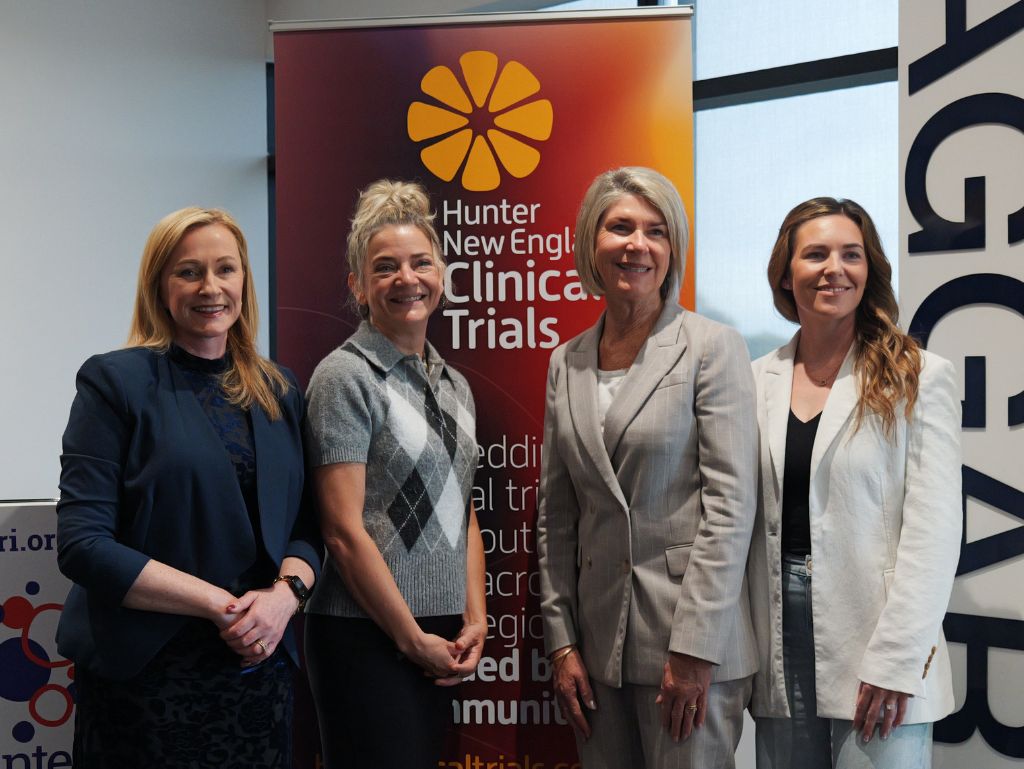
IMAGE | Clinical trials closer to home for Hunter New England communities